Every week, in some form, I get the same question from an Australian parent: which division should my kid be aiming for?
I understand why it comes first. Division I is the only division most families can name, so it becomes the target before anyone has worked out what they actually want from the four years.
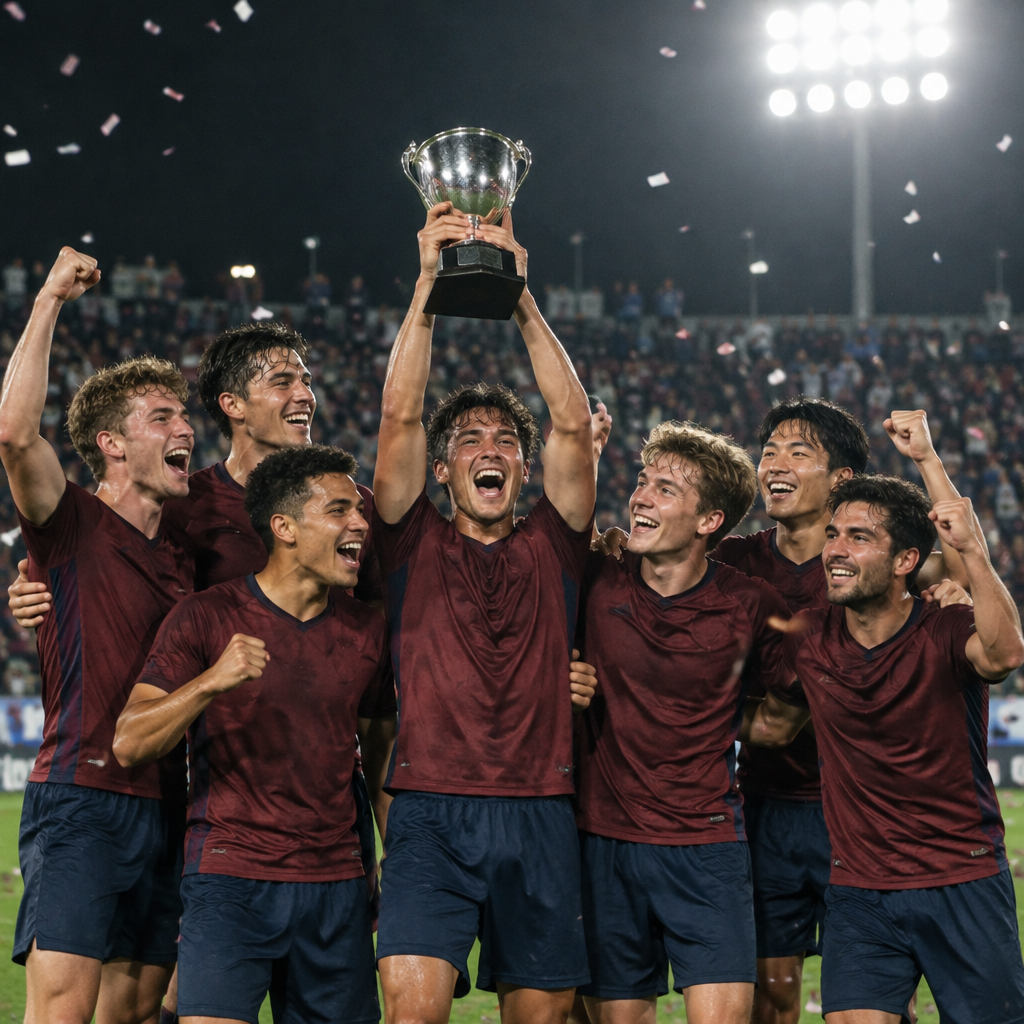
Here is a better answer than my opinion. This season, four of our clients won conference titles. They did it in four different programs, in four different conferences, across three governing bodies and two countries.
Zoe Edwards: Keiser University (NAIA, Florida)

Zoe is a Sydney midfielder out of Freshwater Senior Campus, and she has built her college career the slow way, developing inside the program rather than arriving as the finished product. By her second season she was part of an NAIA national championship.
This season Keiser won the Sun Conference regular season and sits at No.1 in the NAIA. Zoe is a junior, studying psychology.
None of that happens if she had gone somewhere she could not get on the field. She went to a program that developed her, and the medals came after the development. If you want the longer version of her story, I wrote about it here: She Didn't Chase D1. She Chased the Right Fit.
Lucy Allison: Eckerd College (NCAA Division II, Florida)

Lucy is a defender out of Victoria who came to Eckerd College in St Petersburg with a serious school record behind her. She captained her school side and led their scoring, made the Football Victoria Development Allstars in 2024, and was playing in the Victorian 18 and under team at 16.
This season Eckerd took a share of the Sunshine State Conference regular season. She is a sophomore. A conference title in year two, in one of the strongest Division II women's conferences in the country.
Ella Palframan: Campbellsville University (NAIA, Kentucky)

Ella's route was two stage. Canberra junior, then Tyler Junior College in Texas, then a transfer into Campbellsville in Kentucky. That junior college step is not a detour, it is the reason she is at a four-year program that is now winning. If you want to understand how that pathway works, read The Junior College Ladder and how the transfer path actually works.
This season Campbellsville won a share of the Mid-South Conference regular season, the first in the program's history, and went into the conference tournament as the No.1 seed.
Cooper Nielsen: The King's University (ACAC, Edmonton, Canada)

Cooper has been a regular starter at centre back for The King's University in Edmonton. This season he made 11 appearances, and the program went into the ACAC playoffs as the No.1 seed.
They beat Concordia University of Edmonton 3-2 in the final on 1 November to win the first ACAC men's soccer title in the program's history, and with it their first ever place at the CCAA national championship.
That is worth sitting with for a moment. An Australian centre back who was not chased by a Division I program has just won a conference title and is going to a national tournament, and he did it in Canada.
Canada is the pathway most Australian families never ask about. It is not a consolation route. It is a different system with its own conferences, its own scholarship structures, and its own standard of football, and Australian players are winning in it right now. I covered the detail in Beyond the USA and Two Aussie Boys Chose Canada.
What the four have in common
Not the division. Not the country. And definitely not a badge.
Every one of them is in a program where they were recruited for a specific role, in a conference where their team can genuinely compete, at a cost their family could actually carry. The titles are the output. The fit was the input.
Three of the four moved country at 18 or older. One took the junior college route first. Not one of them chased the biggest program that would have them.
Why the division label tells you almost nothing
Here is the part that frustrates me about how this gets sold to Australian families.
Division I is not a quality guarantee. The top 25 to 50 Division I programs are genuinely the best of the best across every division and governing body, and that is true. But outside that band, the overlap is enormous. A top NAIA program will beat a mid-table Division I side. A good junior college will develop a player better than a Division I bench will. A strong Division II program in a tough conference will hand a kid a career that a lower Division I program never would.
The label tells you who administers the competition. It tells you nothing about whether your child will play, develop, graduate, or win.
I wrote about the division myth in more detail here: Why the Best Soccer Colleges Aren't Always D1 and NCAA vs NAIA vs NJCAA.
How we actually choose a program
Parents hear "recruiting" and picture emails going out to two hundred coaches. The emails are the easy part. The judgement is the hard part, and it runs in this order:
Can they get in? Admission and eligibility first, because a beautiful offer that cannot be admitted is worth nothing. Every one of these four was recruited with the academic side checked before anything else.
Can the family afford it? Net cost after aid, in writing, including the things nobody quotes you: flights, insurance, books, the winter coat, the extra semester.
Will they play? A specific role in a specific system, not a general promise about opportunity.
Can the team win? Conference level, roster trajectory, coaching stability, and the players ahead of them in their position.
Does the degree work back home? Especially for anything with accreditation, like health and teaching.
That is the work. It is not glamorous and it does not photograph well, but it is why four clients are holding conference medals in the same season.
And we are not finished
More clients are in conference championship games this week and next, and a few are heading into national tournament rounds. I will report those as they land, once the results are confirmed.
Sixteen years, more than 200 players and families, and six national champions. The ones who thrived were rarely the ones who chased the biggest name. They were the ones who ended up in the right program.
If you are trying to work out what the right program looks like for your child, that is exactly what a Pathway Session is for.
Ready to Understand What's Possible for Your Athlete?
Book a Pathway Session — 60 minutes, $165 (incl. GST), fully credited on sign-up.