Ask most Australian families how US college soccer recruiting works and they'll describe the same picture: a laptop, a spreadsheet, and a few hundred emails to coaches who mostly never write back.
There's a version of that picture that works. We run email campaigns ourselves — disciplined, well-researched, targeted. Done properly, they get athletes in front of programs that would never otherwise know their name.
But here's the thing we've learned across sixteen years of doing this: email is how you get on a coach's list. Standing on their campus is how you get remembered.
That's why, every year, we get on a plane. And when the timing is right, we take families with us.
The email that gets ignored, and the visit that doesn't
An Australian player's email lands in a US college coach's inbox alongside a hundred others that week. Half are from recruiting services the coach has never heard of. A good number have the wrong class year, the wrong position, or footage the coach can't even open. The coach doesn't open most of them. Not because they're lazy — because the volume is absurd and the trust level is zero.
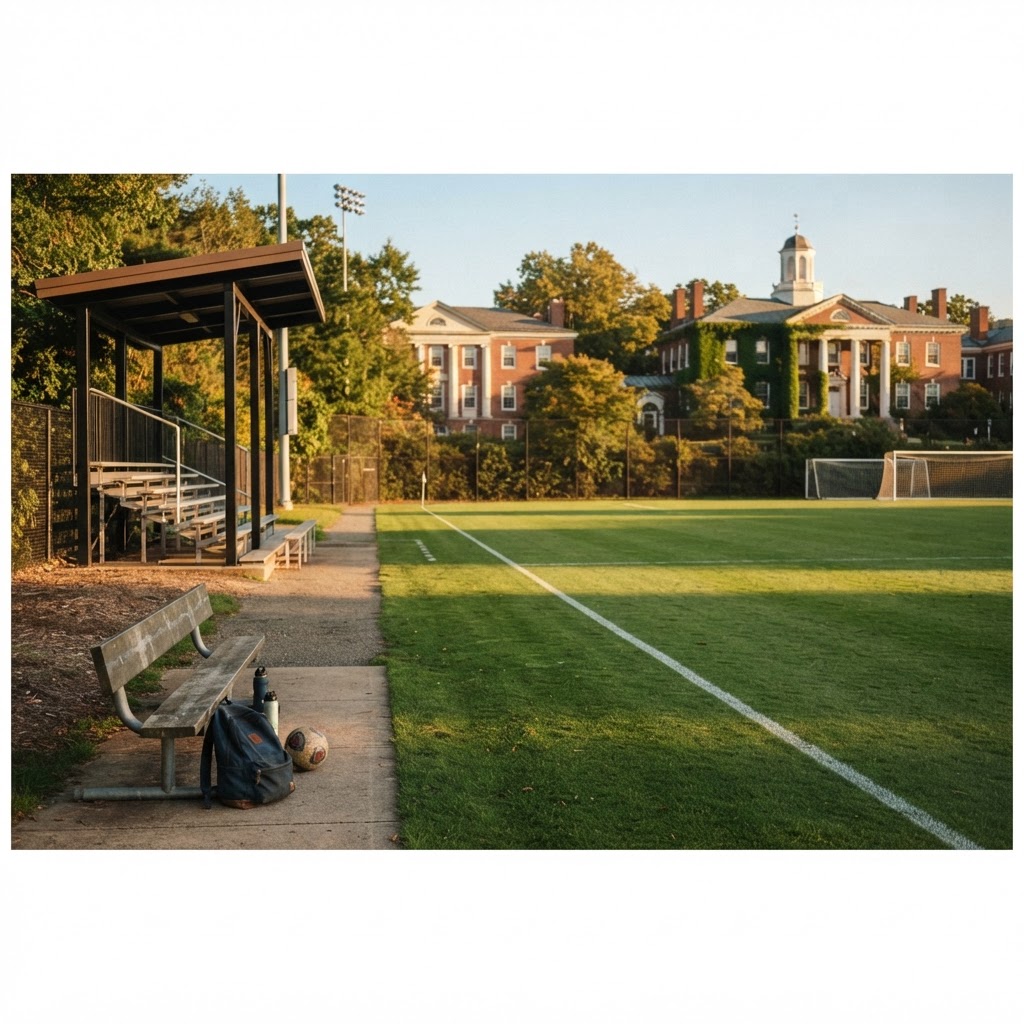
Now consider the same coach watching a family walk onto their training field on a Tuesday afternoon. The athlete is real. The accent is real. The questions the parents ask about academics, travel, and daily schedule are the questions of a family doing this properly. Ten minutes of that conversation does more than fifty emails ever could.
This isn't a theory. It's the pattern behind nearly every placement we're proudest of. The programs where we know the coach's name and they know ours are the programs where things move — where a highlight reel gets watched the day it arrives, where a phone call gets returned, where an Aussie kid gets taken seriously from the first conversation.
What a campus tells you that Google never will
The emails Australian families send are usually built from research done at a distance: rankings, rosters, conference websites. Useful. Also incomplete.
Walk the campus and the picture fills in fast:
The coach, in person. Is this someone your son will actually develop under? You can't tell from a recruiting email. You can often tell within one training session on the sideline — how they speak to players, how the session runs, whether the athletes look like they want to be there.
The distance between promises and reality. Websites sell facilities. Campuses show you what's actually maintained, what's shared with three other sports, and what "access to the gym" actually means at 6am in January.
The fit you can't Google. A regional town in the Midwest is a completely different life to coastal California — and neither is wrong. But an 18-year-old from Sydney should choose that life with their own eyes, not through a lens someone else chose.
The academic reality. How the support services work for international students, how class sizes actually feel, what the pathway into the degree your kid wants really looks like. Ten minutes with the right person on campus answers what a fortnight of emailing never does.
One family, five campuses, one week — and a completely different decision
Last month a family we work with spent a week in California visiting campuses. Here's the part that matters: the list deliberately wasn't a tour of the biggest names.
They walked a Division II campus. A Division III campus. An NAIA program. A junior college. The kind of spread most Aussie families never see, because most families only ever chase the label they already know.
And the daughter walked out of that week with a completely different understanding of what "the right fit" means. Not which school is most famous. Which environment fits her level, her budget, her degree, and her football. That understanding — earned in person, in a week — will shape every decision from here. No email campaign can do that.
Why we front-load the relationship
Here's how the visit-first approach plays out in practice, over and over:
-
The campaign lands warmer. When we email a program we've visited, it isn't a cold email. It references a real place, a real conversation, a real history. Coaches read those differently. So do their assistants, who do most of the actual evaluating.
-
The athlete performs better in conversations. A kid who has stood on the sideline of a college match talks to that coach like a person, not a fan. Coaches notice. Recruitment is a relationship, and relationships need two comfortable sides.
-
Families make decisions faster and better. When the offers come — and they do — a family that has visited isn't choosing between names on a spreadsheet. They're choosing between places they can already picture. That's how a Year 12 commitment gets made calmly instead of in a panic in the transfer window.
-
Bad fits get exposed early. Just as valuable: walking away from the wrong program before a season of heartache. We'd rather a family cross a school off the list in October of Year 11 than discover the problem in February of their first US winter.
"But we can't afford to fly to America"
Most families can't — not early, and not often. That's exactly why it's built into what we do. Over sixteen years and more than 700 college programs, we've built relationships across every division — coaches we've met on their campuses, at their tournaments, at their training grounds. When we can't bring the family, we bring the relationship: an athlete's profile lands in a coach's inbox attached to a name they already trust.
And when a family does make one trip count — usually around Year 11 or 12, once — we plan it like a campaign: the right 4-6 campuses for their level and budget, the right season, the meetings set up before the flights are booked. One well-planned week in the US can do the work of two years of cold emailing.
The order that works
If there's a single piece of advice worth taking from all of this, it's about sequence:
Understand the system first. Learn what level actually fits second. Build relationships third. Then, and only then, send the emails.
Most families invert this. They send emails first, to the biggest names, hoping to figure the rest out later. The results are exactly what you'd expect — and they're the reason so many good Australian footballers believe the system doesn't work when really, the approach didn't.
Where to start
If your family is early in the journey, start by learning the whole landscape — every division, every pathway, what each one costs and what each one genuinely offers. That's why we put our complete guide together, and it's free.
And if your kid is at the point where campus trips and coach conversations are becoming real, that's exactly the conversation we have in a Pathway Session — a full hour on your family's situation, your athlete's level, and the sequence that fits you.
Sixteen years. More than 700 programs. Six national championships won by athletes we've guided. Not one of them was placed by an email alone.
Ready to Understand What's Possible for Your Athlete?
Book a Pathway Session — 60 minutes, $165 (incl. GST), fully credited on sign-up.